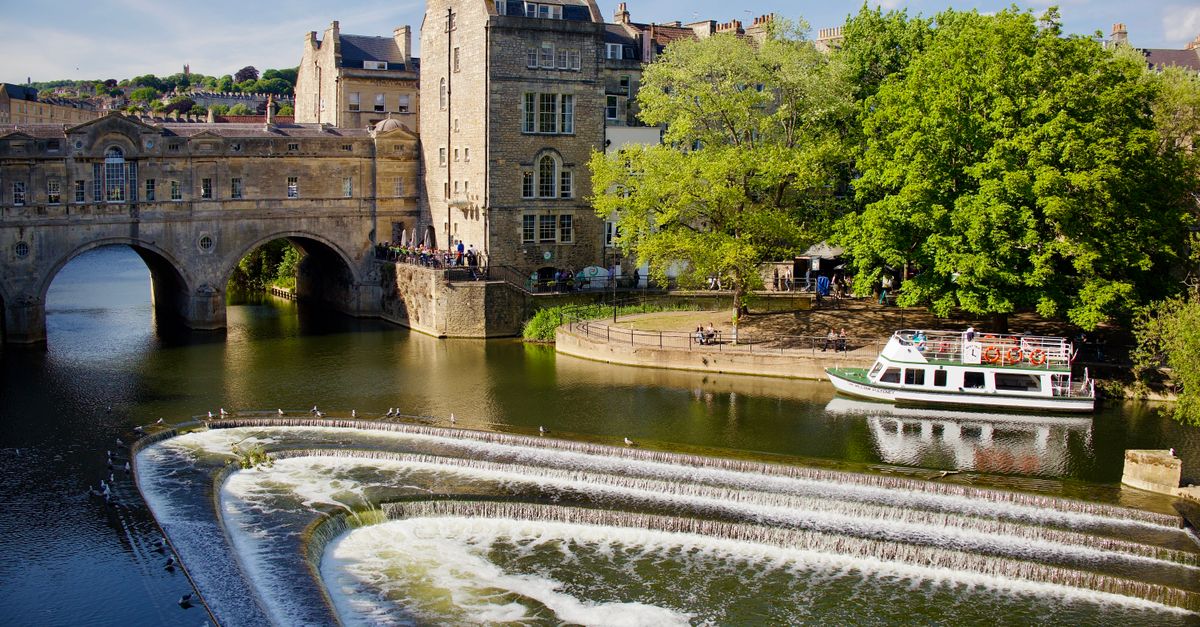
Pulteney Bridge is free to walk across at any time, and it's one of only a handful of bridges in the world lined with shops on both sides along its full length, in the same tradition as Florence's Ponte Vecchio. It crosses the River Avon in the middle of Bath, with the horseshoe-shaped Pulteney Weir just downstream giving the classic postcard view.
History
The bridge was designed by the architect Robert Adam and completed in 1774, commissioned to connect the city centre with the Bathwick estate that William and Frances Pulteney wanted to develop into a new town on the far bank. Before the bridge, Bathwick could only be reached by ferry. Adam had visited Florence and Venice and drew on the shop-lined bridges he'd seen there, the Ponte Vecchio and the Ponte di Rialto, for his design. The bridge didn't stay in its original form for long: by 1792, alterations had widened it and reduced the original sixteen small shops down to six larger ones, which is roughly the arrangement you'll still find today.
The weir
The horseshoe-shaped weir just below the bridge isn't part of Adam's original design. It was built between 1968 and 1972 as a flood prevention measure, replacing an earlier straight weir, and it's now as photographed as the bridge itself. The best view of both together is from Grand Parade or North Parade Bridge, a couple of minutes' walk away.
Visiting
There's no admission charge to walk across or photograph the bridge, and the shops keep normal high street hours. It gets busy in peak season, so early morning is your best bet for photos without crowds. Parade Gardens, just below the bridge on the north bank, has offered free entry since 2025 and is a good spot to sit by the river and take in the view from below.
Getting there
Pulteney Bridge sits right in the city centre, a couple of minutes' walk from the Abbey and the Roman Baths, and about 10 minutes from Bath Spa train station. It's the natural link between the city centre and Great Pulteney Street, which leads on to Sydney Gardens and the Holburne Museum. For a full day plan that takes in the bridge alongside Bath's other central sights, see the Bath in one day guide.
Frequently asked questions
Is Pulteney Bridge free to visit?
Yes, there's no charge to walk across it. You only pay if you buy something from one of the shops built into it.
Who designed Pulteney Bridge?
The architect Robert Adam, completed in 1774, inspired by the shop-lined bridges he'd seen in Florence and Venice.
What is Pulteney Weir?
The horseshoe-shaped weir just downstream of the bridge, built between 1968 and 1972 for flood prevention, and now one of the most photographed spots in Bath.
Where's the best place to photograph Pulteney Bridge?
Grand Parade or North Parade Bridge give the classic view of the bridge and weir together, and Parade Gardens gives a lower-level view from the riverbank.
Are there still shops on Pulteney Bridge?
Yes, it's still lined with working shops on both sides, though the original sixteen small units were consolidated into six larger ones back in 1792.